
The Reformation’s Enabling Circumstances
Book of EstherThis flow traces how religious abuses, political conditions, scholarship, and Luther’s own preparation combine in Carson’s account of the Reformation.
increasing Bearing strength in each event
 decreasing
Bearing strength in each eventdecreasingAn Earlier Darkness

Reform Begins from Weak Foundations
Failed Precursors
Carson notes that earlier critics of the Church of Rome challenged its teachings but did not produce a lasting broad reform. Their efforts arise in conditions that limit their reach.
A Later Opening
The contrast prepares the essay’s central claim that Luther’s timing mattered. A reforming message requires not only conviction, but a historical setting in which it can circulate and find protection.
A Revival of Letters

Learning Returns to Public Importance
New Intellectual Resources
The revival of literature and the study of ancient languages make Scripture and religious controversies more accessible to learned readers. Carson treats scholarship as an instrument that can expose errors as well as defend them.
A Prepared Audience
The growth of learning helps make criticism of established religious practices intelligible to more people. In the essay, these intellectual changes prepare conditions for the later reforming challenge.
Indulgences Ignite Protest
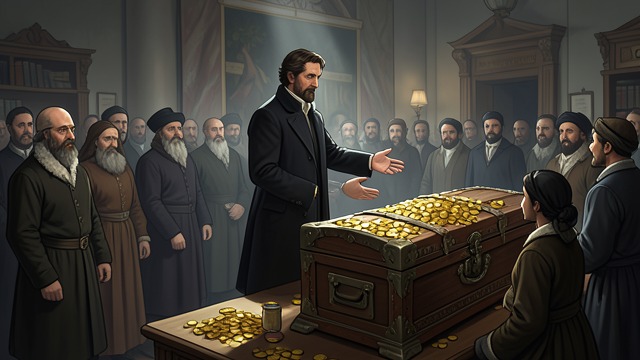
A Controversial Trade Provokes Opposition
An Abusive Practice
The sale of indulgences reaches an extravagance that draws attention from both rulers and ordinary people. Luther’s initial protest is directed at this practice, before his position expands into a broader critique.
An Accidental Opening
Carson argues that the abuse gave Luther a concrete issue around which opposition could gather. A practice intended to sustain the established system instead helps make its weaknesses publicly visible.
A Protected Reform Movement

Political Fragmentation Shelters Reform
Local Authority
The German princes possess substantial authority within their territories. Frederick, Elector of Saxony, gives Luther protection that a centralized ruler might have denied.
An Empire Diverted
Charles V’s conflicts and political ambitions limit how fully he can focus on the reformers. Carson sees the intersecting interests of rulers as providential conditions rather than as evidence that the reform succeeded by political power alone.
Scripture in the People’s Hands

Translation Extends the Challenge
A Vernacular Text
Martin Luther translates the Bible, making Scripture more available to readers who do not depend on clerical access to Latin texts. Carson regards translation as one of the reformer’s most consequential contributions.
A New Kind of Reach
Printed books and growing literacy allow religious arguments to travel beyond the immediate circle of scholars and clergy. The Bible becomes a continuing presence in households as well as a source of public dispute.
Before the revival of learning in Europe
From the late medieval period into the sixteenth century
At the opening of the Reformation period
After Luther begins his public challenge
During the Reformation’s expansion
